


Investing can be an important part of long-term financial planning. While saving money can help protect funds for future needs, investing gives money an opportunity to grow over time. For beginners, however, the investment world can seem complicated because there are many products, strategies, terms, and risks to understand.
The good news is that beginners do not need to understand everything before getting started. Learning the basic principles, setting clear goals, understanding risk, and starting with a simple approach can make the process easier.
Investing always involves some level of risk, and there is no guarantee that an investment will increase in value. A good starting point is therefore to understand how investing works before putting money into any investment.
What Is Investing?
Investing means putting money into an asset with the expectation that it may generate a return over time.
Common investments include stocks, bonds, mutual funds, exchange-traded funds, real estate, and other assets.
The return may come from price appreciation, interest, dividends, or a combination of these sources.
Unlike money held in a regular bank account, investments can lose value. This is one of the most important differences between saving and investing.
Why Do People Invest?
One reason people invest is to build wealth over a long period.
Inflation can reduce the purchasing power of money over time. Investing may provide an opportunity for money to grow at a rate that can potentially exceed inflation, although returns are never guaranteed.
People may invest for retirement, education, a home purchase, long-term financial goals, or general wealth building.
The right investment strategy depends on the person’s goals, time horizon, financial situation, and ability to tolerate losses.
Start With Financial Basics
Before investing, it can be useful to organize your basic finances.
This may include creating a budget, paying attention to high-interest debt, and building an emergency fund.
An emergency fund can provide money for unexpected expenses without requiring you to sell investments during an unfavorable market period.
Investing money that you may need immediately can create unnecessary financial pressure.
Define Your Investment Goals
A clear goal can make investing easier to understand.
For example, a person may want to invest for retirement several decades away, while another person may be saving for a goal within five years.
These situations can require different approaches because the amount of time available to recover from market declines is different.
Write down what you are investing for and approximately when you expect to need the money.
Understand Your Time Horizon
Your time horizon is the period you expect to remain invested.
A longer time horizon may allow an investor to tolerate more short-term market fluctuations.
A shorter time horizon may require greater attention to preserving capital because there may be less time to recover from a decline.
There is no universal investment time horizon. It depends on the purpose of the money.
Learn About Risk
Every investment carries risk.
Stocks can experience significant price changes. Bonds can be affected by interest rates and credit conditions. Real estate can decline in value and may have liquidity limitations.
Risk should not be viewed only as the possibility of losing money in a single day. Investors should also consider inflation risk, interest-rate risk, liquidity risk, and other factors.
Understanding these risks can help beginners choose investments that fit their circumstances.
Learn the Main Investment Types
Stocks
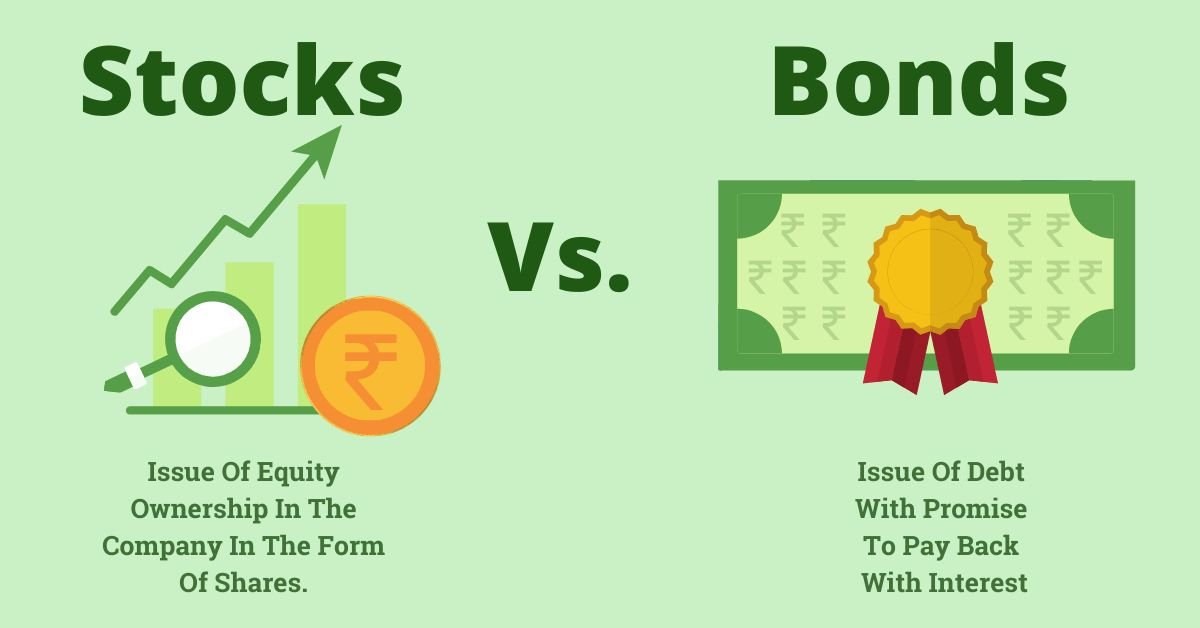
Stocks represent ownership in a company.
When you buy shares, you generally become a shareholder. The value of a stock can rise or fall depending on company performance, market conditions, investor expectations, and many other factors.
Stocks have historically provided long-term growth potential, but they can also experience substantial losses.
Bonds
Bonds are debt investments.
When an investor buys a bond, they are generally lending money to a government, municipality, company, or other issuer.
The issuer typically pays interest according to the bond’s terms and returns principal according to the agreement, subject to the issuer’s ability to meet its obligations.
Bonds also carry risks, including interest-rate and credit risk.
Mutual Funds
Mutual funds pool money from multiple investors and use the money to purchase a collection of investments.
A fund may hold stocks, bonds, or other securities.
Mutual funds can provide diversification because one investment may contain many individual assets.
Exchange-Traded Funds
Exchange-traded funds, commonly called ETFs, also hold collections of assets.
Many ETFs track an index or a particular market segment.
ETFs trade on exchanges during market hours, similar to stocks.
Costs, investment strategy, risk, and holdings vary from one ETF to another.
Diversification
Diversification means spreading investments across different assets rather than depending heavily on one investment.
For example, an investor who owns many companies through a diversified fund may have less exposure to the performance of any single company than someone who owns only one stock.
Diversification does not eliminate investment risk, but it can reduce the effect of a poor performance from one individual investment.
Understand Fees
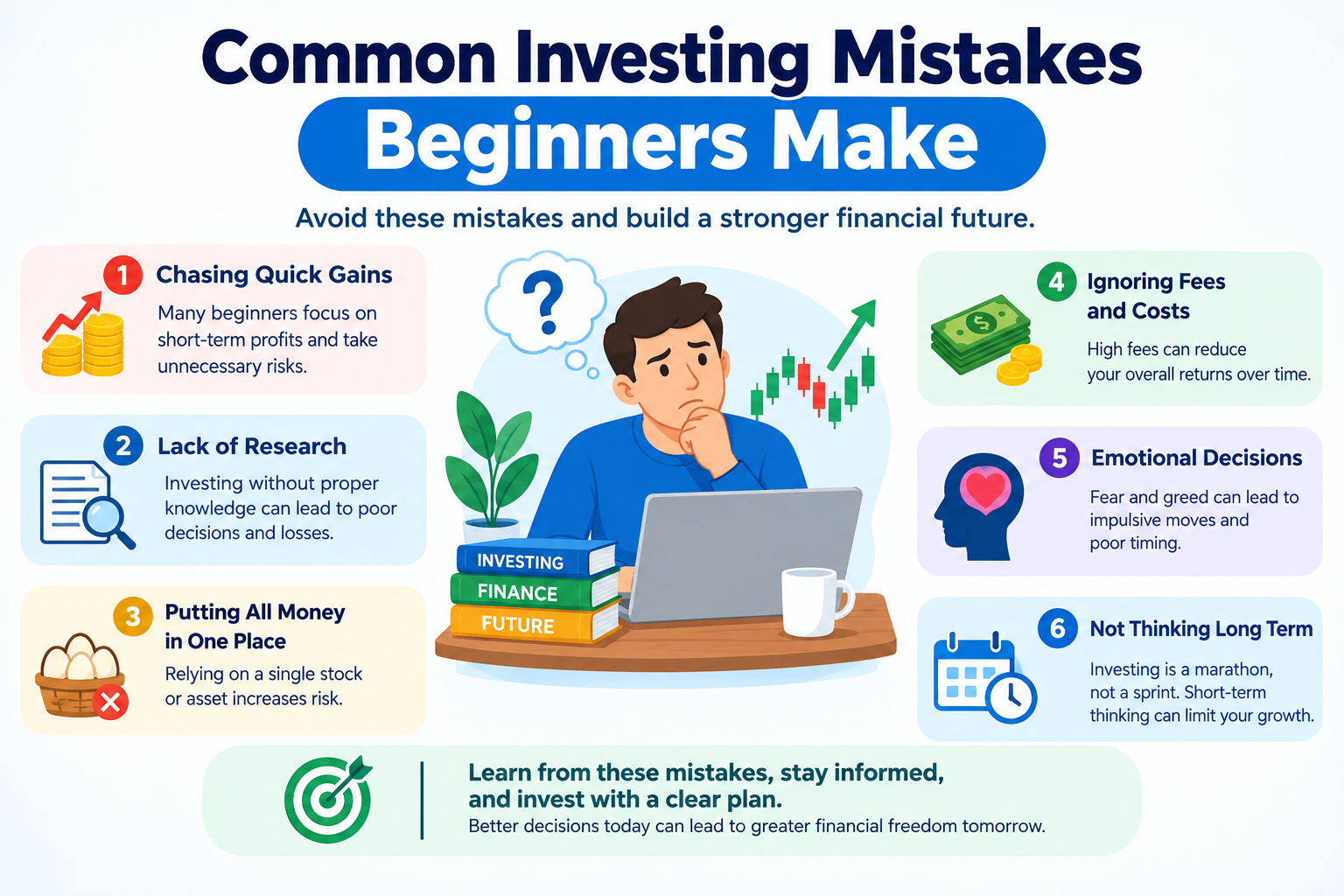
Investment fees can affect long-term returns.
Possible costs include expense ratios, commissions, account fees, advisory fees, transaction costs, and other charges.
Even small recurring costs can become significant over a long period.
Before investing, read the fund or account information carefully and understand what you are paying.
Consider Regular Investing
Some investors contribute a fixed amount on a regular schedule.
This approach can help create a consistent investing habit.
For example, an investor might contribute money every month rather than trying to determine the perfect time to invest.
Regular investing does not guarantee a profit or prevent losses, but it can reduce the pressure to make a single large timing decision.
Avoid Trying to Predict Every Market Move
Financial markets can move because of economic data, interest rates, company results, geopolitical events, investor expectations, and many other factors.
Trying to predict every short-term movement can lead to frequent buying and selling.
For many long-term investors, a consistent strategy based on goals and risk tolerance can be easier to maintain than reacting to every market headline.
Understand Compound Growth
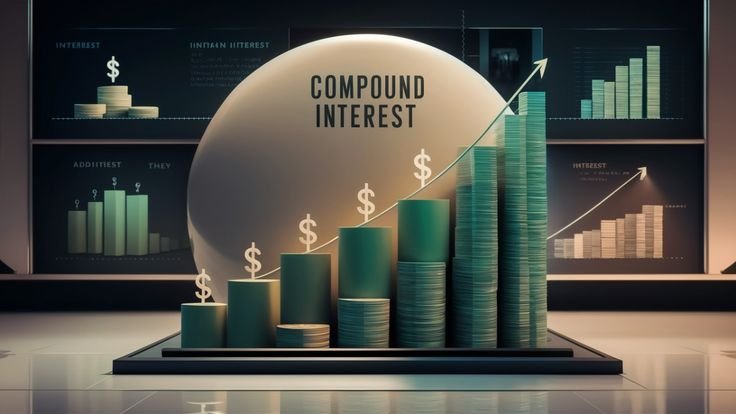
One of the most important concepts for long-term investors is compound growth.
When investment returns remain invested, future returns can potentially be earned on both the original amount and previous returns.
The longer money remains invested, the more time there is for this process to work. However, actual investment returns vary, and markets do not provide a fixed annual return.
Choose an Appropriate Investment Account
Depending on the country and financial goals, investors may have access to different types of investment accounts.
Some accounts may provide tax advantages for retirement or other purposes, while regular brokerage accounts may offer broader flexibility.
The rules, contribution limits, taxes, and withdrawal requirements depend on the jurisdiction and account type.
Research Before Buying
Before purchasing an investment, learn what you are buying.
Read the investment’s objective, fees, historical information, risk factors, and holdings when applicable.
Do not invest simply because something is popular online.
If you do not understand how an investment works, take time to learn before putting money into it.
Keep Expectations Realistic
Investing is generally a long-term activity.
Promises of guaranteed high returns should be treated with caution.
Higher potential returns generally come with higher risk. No legitimate investment can guarantee high returns without risk.
Beginners should focus on understanding the relationship between risk and potential return rather than looking for a shortcut to wealth.
Review Your Portfolio
Once you begin investing, review your portfolio periodically.
The goal is not necessarily to check prices every day. Instead, review whether your investments still match your financial goals and risk tolerance.
Major changes in income, financial responsibilities, goals, or time horizon may require adjustments.
Final Thoughts
Starting to invest does not require knowing every financial term or market strategy.
Beginners can start by understanding their financial situation, defining goals, building an emergency reserve, learning about investment types, understanding risk, and creating a diversified approach.
Investing involves uncertainty, and losses are possible. The most important step is to understand what you are buying and why it fits your financial plan.
A simple, informed, and consistent approach can help beginners develop better long-term financial habits.
Frequently Asked Questions
How much money do I need to start investing?
The amount depends on the investment platform and product. Some platforms allow relatively small investments.
Is investing safe?
Investing involves risk. The value of investments can rise or fall, and losses are possible.
Should beginners invest in stocks?
Stocks can be part of a diversified portfolio, but whether they are appropriate depends on the investor’s goals, time horizon, and risk tolerance.
What is diversification?
Diversification means spreading money across different investments to reduce dependence on a single asset.
How long should I invest?
The appropriate period depends on the financial goal. Long-term goals generally provide more time to handle short-term market fluctuations.





Leave a Reply