

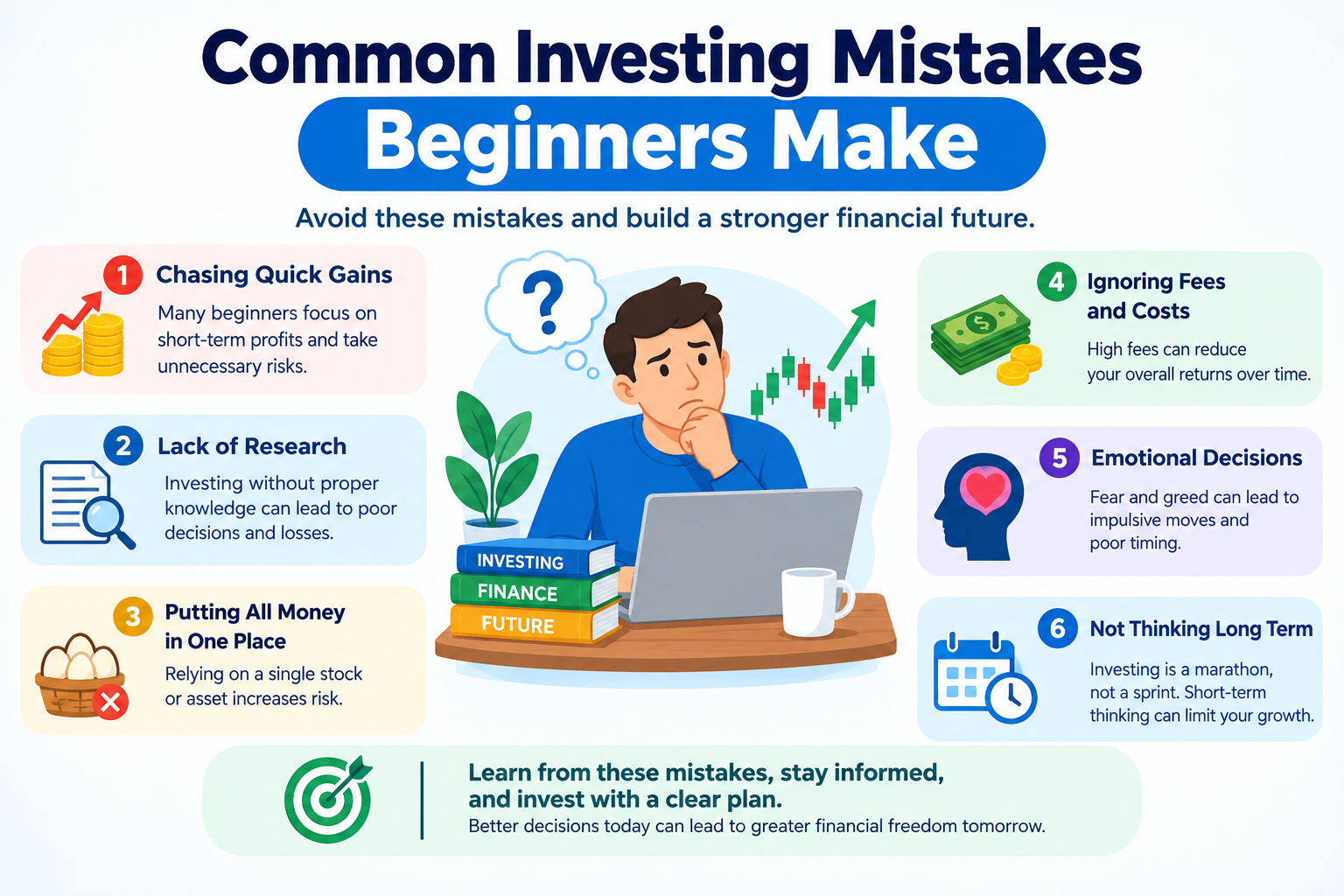
Investing can help people work toward long-term financial goals, but beginners can make mistakes that affect their results.
Many investing mistakes happen because people act without understanding risk, follow short-term market trends, or make decisions based on emotions.
Learning about common mistakes does not eliminate investment risk, but it can help new investors approach the market more carefully.
Investing Without a Clear Goal
One common mistake is investing without knowing why the money is being invested.
An investment strategy for retirement may look different from a strategy for a goal that is only a few years away.
Before investing, define the purpose of the money and consider when it may be needed.
Ignoring Risk
Every investment has some form of risk.
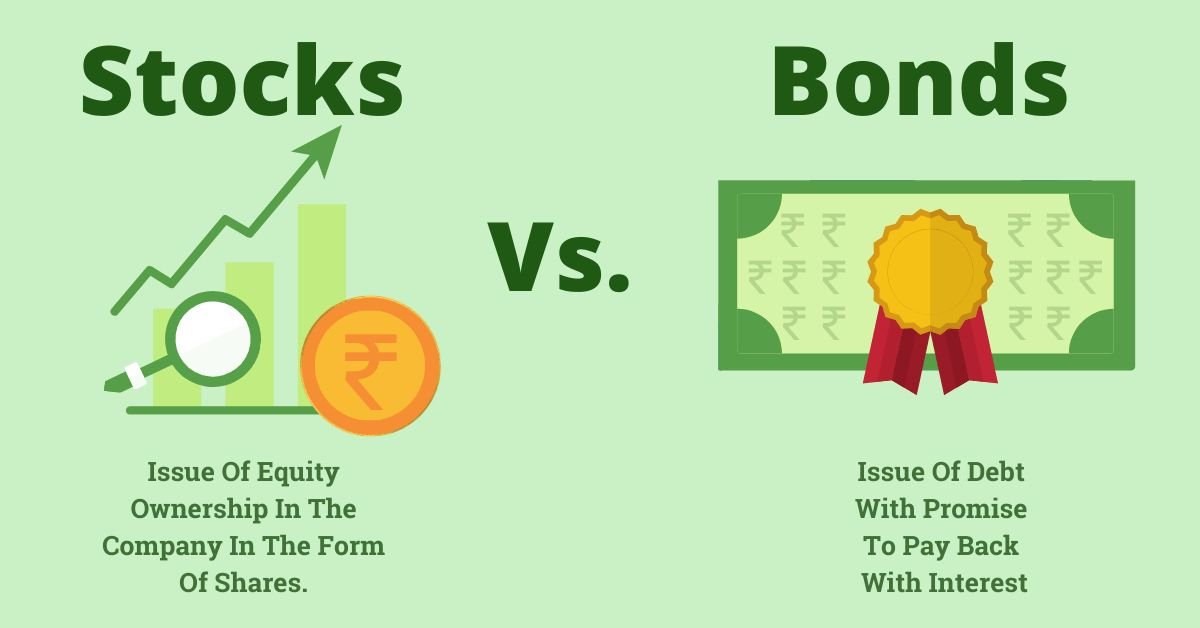
Stocks can lose value. Bonds can be affected by interest rates and credit problems. Real estate can decline in value and may be difficult to sell quickly.
Beginners sometimes focus only on potential returns and ignore possible losses.
Understanding downside risk is just as important as understanding potential gains.
Putting All Money Into One Investment
Concentration can create significant risk.
If an investor puts most or all of their money into one company and that company performs poorly, the portfolio may suffer heavily.
Diversification can spread exposure across multiple investments.
It does not guarantee profits or eliminate losses, but it can reduce dependence on a single investment.
Following Investment Hype
Popular investments can attract significant attention online.
A stock, cryptocurrency, fund, or other asset may become popular because of social media discussions or news coverage.
Buying simply because other people are excited about an investment can lead to decisions without proper research.
Investors should understand the asset before purchasing it.
Trying to Time the Market
Market timing involves attempting to predict when prices will rise or fall.
Even experienced investors cannot consistently predict every short-term market movement.
Beginners may buy after prices have already risen and sell after prices fall because of emotional reactions.
A long-term strategy can reduce the need to make repeated short-term predictions.
Checking Investments Constantly
Constantly checking portfolio values can increase emotional pressure.
Markets can change every day, sometimes significantly.
If the investment strategy is designed for a long-term goal, daily price movements may not be relevant to the overall plan.
Regular reviews can be useful, but checking prices constantly may encourage unnecessary decisions.
Ignoring Fees
Investment fees can reduce returns.
Common costs may include fund expense ratios, trading commissions, advisory fees, account fees, and other charges.
Investors should understand the total cost of an investment before purchasing it.
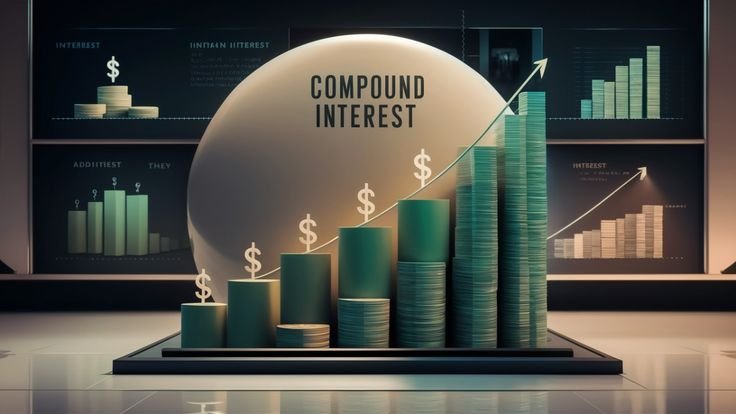
A small annual fee may appear insignificant, but its effect can accumulate over many years.
Not Understanding What You Own
Investing in something without understanding it is a major risk.
Before buying an investment, learn what it owns, how it generates returns, what fees apply, and what could cause it to lose value.
If the investment structure is difficult to explain in simple terms, take more time to research it.
Investing Emergency Money
Money needed for immediate expenses generally should not be exposed to unnecessary market risk.
An unexpected medical expense, vehicle repair, housing cost, or temporary income interruption may require quick access to cash.
An emergency reserve can help separate short-term financial needs from long-term investments.
Ignoring High-Interest Debt
Investing while carrying expensive high-interest debt can create a difficult financial situation.
The interest charged on debt may be higher than the return an investor expects from an investment.
The right approach depends on the person’s complete financial situation, but high-interest debt should not be ignored when creating an investment plan.
Expecting Guaranteed Returns
No legitimate investment can guarantee high returns without risk.
Promises of quick profits or guaranteed high returns should be examined carefully.
Investors should understand where the return is supposed to come from and what could cause a loss.
Borrowing Money to Invest
Borrowing money to invest can increase both potential gains and potential losses.
If an investment falls while the investor still has to repay the loan, the financial damage can be significant.
Leverage is a complex strategy and may not be appropriate for inexperienced investors.
Making Emotional Decisions
Fear and excitement can influence financial decisions.
A falling market may cause some investors to sell because they are afraid of further losses.
A rapidly rising market may encourage others to buy because they fear missing out.
Making decisions based entirely on emotions can result in buying high or selling low.
Failing to Diversify
Diversification is another important consideration.
A diversified portfolio may contain different companies, sectors, asset classes, regions, or investment types.
The appropriate level of diversification depends on the investor’s situation.
Diversification cannot protect against every type of market decline, but it can reduce concentration risk.
Ignoring Taxes
Investment gains, dividends, interest, and other income may have tax consequences.
Tax rules vary by country and account type.
Investors should understand the tax treatment of their investments and keep appropriate records.
For complicated situations, professional tax advice may be useful.
Choosing Investments Based Only on Past Performance
Past performance can provide historical information, but it does not guarantee future results.
An investment that performed strongly in previous years may not perform the same way in the future.
Investors should examine broader factors such as fees, risk, strategy, diversification, and suitability.
Not Reviewing the Portfolio
The opposite mistake is never reviewing investments.
Financial goals can change. Income can change. Family responsibilities can change. The time remaining until a financial goal can also become shorter.
A periodic review can help determine whether the investment strategy still matches the investor’s circumstances.
Expecting Quick Wealth
Investing is usually a long-term process.
Trying to become wealthy quickly can encourage excessive risk-taking.
Sustainable financial progress often involves regular saving, controlled spending, disciplined investing, and patience.
There will be periods when investments perform well and periods when they do not.
Copying Someone Else’s Portfolio
A portfolio that works for one person may not be appropriate for another.
Investors have different incomes, goals, time horizons, tax situations, and risk tolerances.
Following another person’s portfolio without understanding these differences can create unnecessary risk.
Final Thoughts
Beginners can avoid many investing mistakes by slowing down and learning before making financial decisions.
Clear goals, diversification, realistic expectations, attention to fees, understanding risk, and long-term thinking can provide a useful foundation.
There is no investment strategy that guarantees profits. Market conditions can change, and every investment decision carries uncertainty.
The goal should be to understand the risks and make investment decisions that fit the individual’s financial circumstances and goals.
Frequently Asked Questions
What is the biggest mistake new investors make?
There is no single mistake that applies to everyone, but investing without understanding risk or the investment itself can create serious problems.
Should beginners try to time the market?
Predicting short-term market movements is difficult. A consistent long-term strategy may reduce the need for frequent timing decisions.
Is diversification important?
Diversification can reduce concentration risk by spreading investments across different assets or securities.
Should I invest my emergency fund?
Emergency money generally needs to remain accessible and should be considered separately from long-term investments.
Can investing make you rich quickly?
There is no reliable way to guarantee quick wealth through investing. Higher potential returns generally involve higher risks.






Leave a Reply