

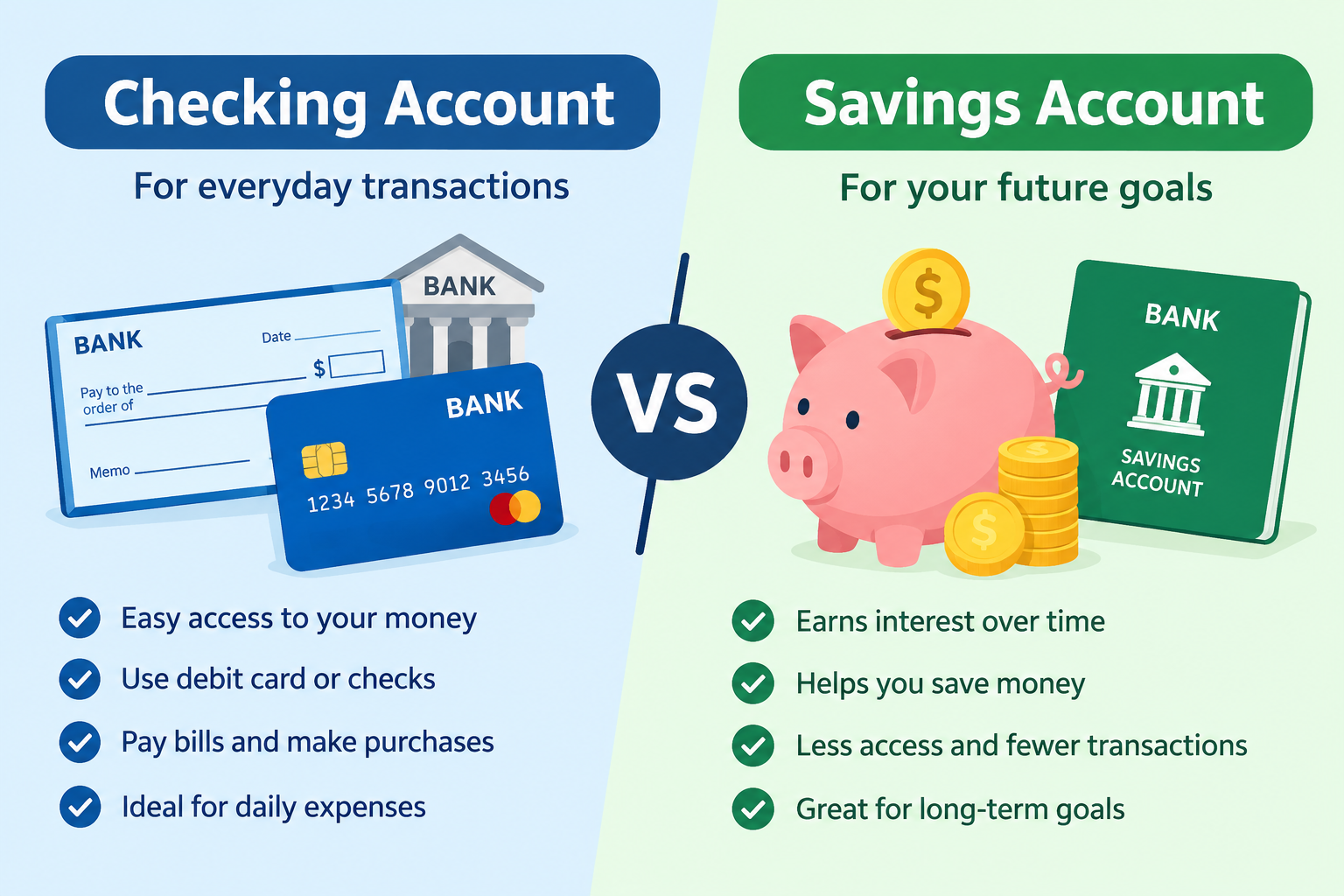
Checking and savings accounts are two of the most common types of bank accounts. Both can hold money and provide access to banking services, but they are designed for different purposes.
A checking account is generally intended for everyday spending and frequent transactions. A savings account is generally designed to hold money for future needs and may pay interest.
Understanding the difference can help people choose the right account structure for their financial needs.
What Is a Checking Account?
A checking account is a bank account designed for regular transactions.
Customers commonly use checking accounts to receive direct deposits, pay bills, make purchases, withdraw cash, and transfer money.
Most checking accounts provide a debit card and access to online or mobile banking.
The main advantage of a checking account is accessibility. Money can usually be accessed frequently through different payment methods.
What Is a Savings Account?
A savings account is primarily designed for setting money aside.
Savings accounts may pay interest on deposited funds. The interest rate and account terms depend on the financial institution and account type.
People may use savings accounts for emergency funds, short-term goals, planned purchases, or general financial reserves.
Because the purpose is saving rather than daily spending, some savings accounts may have different transaction rules or withdrawal conditions.
Main Difference Between the Two
The basic difference is how the accounts are normally used.
A checking account is usually used for money that needs to be accessed regularly.
A savings account is generally used for money that a person wants to keep aside.
For example, a person’s paycheck may be deposited into a checking account. Part of that money could then be transferred into a savings account for future expenses.
Access to Money
Checking accounts are generally built for frequent access.
Customers may use debit cards, electronic transfers, bill payments, checks, and ATM withdrawals.
Savings accounts also provide access to funds, but the account may be less convenient for frequent spending.
The exact rules depend on the bank and the account agreement.
Interest
Savings accounts may pay interest on deposited money.
Checking accounts may or may not pay interest depending on the account.
When comparing accounts, customers should review the annual percentage yield, fees, minimum balance requirements, and other conditions rather than focusing only on whether an account pays interest.
Fees
Both checking and savings accounts can have fees.
Possible fees include monthly maintenance fees, overdraft-related charges, ATM fees, wire transfer fees, or fees for certain account services.
Some banks offer accounts with no monthly maintenance fee when specific requirements are met.
Customers should review the fee schedule before opening an account.
Debit Cards
Checking accounts commonly come with debit cards.
A debit card allows customers to make purchases using funds available in the linked account.
Some savings accounts may also provide ATM access, but they are generally not designed to function as everyday spending accounts.
Direct Deposit
Checking accounts are frequently used for direct deposit of salaries and other regular payments.
A customer may provide account and routing information to an employer or other approved organization so funds can be deposited electronically.
Some savings accounts can also receive direct deposits, depending on the institution.
Bill Payments
Checking accounts are often used to pay recurring bills.
Online banking can make it possible to schedule payments for utilities, loans, subscriptions, and other expenses.
Using a checking account for regular bills can help keep everyday financial activity organized.
Emergency Funds
Savings accounts are commonly used for emergency funds.
An emergency fund is money reserved for unexpected expenses such as vehicle repairs, home repairs, or temporary income disruptions.
Keeping emergency money separate from everyday spending can make it easier to avoid accidentally using those funds.
Can You Have Both?
Yes. Many people use both checking and savings accounts.
The checking account can handle everyday spending while the savings account holds money intended for future needs.
This separation can make budgeting easier because money for long-term or unexpected expenses is not mixed with regular spending funds.
How Much Money Should You Keep in Checking?
There is no single amount that works for everyone.
The appropriate balance depends on income, expenses, bill schedules, emergency savings, and personal financial goals.
A customer may keep enough money in checking to cover upcoming bills and regular spending while transferring additional funds into savings.
How Much Should You Keep in Savings?
The amount depends on individual circumstances.
Some people focus on building an emergency fund first, while others save for specific goals such as education, travel, a vehicle, or a home.
The important point is to create a savings strategy that matches expected expenses and financial responsibilities.
Checking Account Advantages
Checking accounts provide convenient access to money.
They are useful for:
- Everyday purchases
- Bill payments
- Direct deposits
- ATM withdrawals
- Debit card transactions
- Regular transfers
Because checking accounts are designed for frequent transactions, they are generally suitable for day-to-day financial management.
Savings Account Advantages
Savings accounts can help separate money from everyday spending.
They may also earn interest.
Savings accounts can be useful for:
- Emergency funds
- Short-term goals
- Planned purchases
- Financial reserves
- Building saving habits
What Should You Consider When Choosing an Account?
Before opening an account, compare the fees, minimum balance requirements, interest rate or APY, ATM access, digital banking features, transaction rules, and customer support.
It is also important to understand whether the bank provides deposit insurance through the applicable national or regional deposit insurance system.
Can Money Be Moved Between Both Accounts?
Yes. Most banks allow customers to transfer money between checking and savings accounts.
For example, a customer could move money into savings after receiving income and transfer money back to checking when needed for an upcoming expense.
Transfer times depend on the bank and type of transfer.
Final Thoughts
Checking and savings accounts serve different purposes.
Checking accounts are generally designed for frequent transactions and everyday spending. Savings accounts are designed to help people keep money aside and may provide interest.
Using both accounts together can make it easier to separate spending money from savings.
The right account structure depends on income, expenses, financial goals, fees, and the services offered by the bank.
Frequently Asked Questions
Is a checking account better than a savings account?
Neither account is universally better. They are designed for different purposes.
Can I have a checking and savings account at the same bank?
Yes. Many banks allow customers to have both account types.
Does a savings account earn interest?
Many savings accounts pay interest, but rates and conditions vary by financial institution.
Can I use a savings account for daily spending?
Some banks allow transactions from savings accounts, but they may have different rules or limitations than checking accounts.
Why should I have both accounts?
Using both can help separate everyday spending from money reserved for future needs.







Leave a Reply